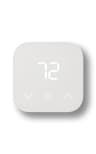
Do smart thermostats actually save money?
They can — but the savings come from behavior, not magic. The U.S. Department of Energy’s guidance on programmable thermostats explains that turning the temperature back while you’re asleep or away is what lowers heating and cooling costs; a smart thermostat mostly automates those setbacks so you don’t have to remember them. The DOE also points to connected thermostats as a way to squeeze more savings out of your HVAC system through scheduling and remote control, and ENERGY STAR runs a certification program specifically for smart thermostats that meet its energy-performance criteria.
The honest version: how much you save depends on your climate, your schedule, and how aggressively you let the thermostat set back the temperature. A model that auto-schedules and nudges you toward efficient settings — like the Nest — makes it more likely you’ll actually capture those savings, because it does the remembering for you. Treat the payback as “probable over a couple of seasons if you use it well,” not a guaranteed line item.
The C-wire question, up front
This is the single most common smart-thermostat snag, so settle it before you buy. A C-wire(short for “common” wire) is the extra wire that delivers continuous 24-volt power to the thermostat. Older thermostats often didn’t need one because they only closed a circuit to call for heat; a smart thermostat has a screen, Wi-Fi and a processor running full-time, so it wants steady power. Pull your current thermostat off the wall and look at the wire terminals: if there’s a wire in the Cslot, you’re set.
If there isn’t, you have options, and they vary by pick. The ecobee Premiumincludes a Power Extender Kit (PEK) adapter that lets it run without a dedicated C-wire in many homes — a real advantage if your wiring is older. The Nest Thermostatworks without a C-wire in some setups but may need Google’s separate power connector. The budget Amazon Smart Thermostatis the strictest here: it requires a C-wire and doesn’t include an adapter, so confirm you have one before you buy it. When in doubt, photograph your wiring and check the manufacturer’s compatibility checker.
Which one is right for you?
If you live in Google’s world and want the most thermostat for the money, the Nest Thermostat is the easy call. If you want a device that works with everyecosystem — Apple Home included — and ships with a room sensor and that no-C-wire adapter, the ecobee Premium is the most flexible pick. Step up to the Nest Learning Thermostat for genuine auto-learning, an included temperature sensor and the nicest hardware. And if the only goal is the lowest price on a reliable unit, the Amazon Smart Thermostatis Honeywell-built and Alexa-controlled — just double-check that C-wire first. Running more than one brand? The compatibility matrix shows what pairs with what.