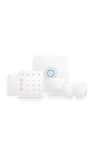
What makes a security system truly DIY
The label gets used loosely, so here’s what we actually look for. A real DIY system installs with peel-and-stick sensors and a plug-in base station— no tools beyond maybe a screwdriver, and nothing that needs an electrician. It should let you self-monitor from the app for free, so you get arm/disarm control and phone alerts without paying anyone. And professional monitoring, if you add it, should be month-to-month with no contract, so the ongoing cost is a choice you can cancel, not a commitment you signed for.
Self-monitoring vs professional monitoring
Every system here can alert youfor free. The paid tier adds a monitoring center that can dispatch police or fire when an alarm trips and you don’t respond. Whether that’s worth it depends on your situation — we walk through the trade-off in detail in DIY vs professional monitoring. The key DIY advantage is that the choice stays yours: turn dispatch on for a vacation, off the rest of the year, with no penalty.
Think about expandability and ecosystem
Buy the kit that matches your home’s size and your smart-home leanings. A small apartment needs a couple of door sensors and a motion detector; a larger home adds sensors room by room, so pick a system that sells parts individually. Ecosystem matters too: the Ring Alarm leans into Alexa and Ring cameras, the eufy kit into eufy’s no-fee cameras, and the Abode kit is the one whose hub is certified for Apple Home and also controls Z-Wave and Zigbee, so third-party locks and lights join the alarm itself — see the compatibility matrix if you want it to tie into the rest of your devices.
Why DIY suits renters and first-timers
DIY security has quietly become the default for a whole group of people the old installer model never served well. Rentersare the clearest case: because the sensors are wireless and stuck on rather than screwed and wired in, you can fit a full system without a landlord’s permission, then peel it off and take it with you when you move — the hardware is yours, not the building’s. First-timersbenefit too, because there’s no big commitment to get wrong: you can start with a small kit, live with it, and add sensors only where you find you need them, all without a contract or a salesperson. And because you can turn professional monitoring on and off month to month, you’re free to begin with free self-monitoring and upgrade later if your needs change. That flexibility — own it, move it, expand it, cancel the plan — is the real reason DIY has taken over, and it’s worth weighing as heavily as any single feature when you choose a kit.
How much does a DIY system cost to run?
That’s the number the box doesn’t total up. The hardware is a one-time cost; the ongoing cost is whatever monitoring tier you choose, from zero (self-monitored) upward. Over five years, a self-monitored DIY system can cost a fraction of a professionally-installed one — the full breakdown is in our security-system cost guide. Whatever you run, secure the account with a strong password and two-factor authentication; an alarm is only as trustworthy as the login that controls it.