Circuit & Chime

Best Smart Home Hubs

From a cheap Echo Dot to a local-first Hubitat, the hubs worth buying — ranked by ecosystem, protocol support and how much they lean on the cloud.

By Stephen V.Last updated How we test

How this is funded:we earn a commission if you buy through our links, at no extra cost to you. It never changes which product we recommend, and we’ll tell you plainly when we’d skip one. Full disclosure.

Quick picks

Ranked on published specs, storage and running cost. Select a row to jump to the full write-up. We haven’t lab-tested these — here is exactly what we do instead.

#ProductBest forSubscriptionPrice
1
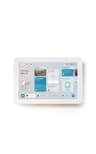
Amazon Echo Hub (8-inch panel)

Amazon Echo Hub (8-inch panel)

A wall-mounted dashboard for an Alexa home, with Zigbee, Thread and Matter radios built in — so it's a genuine smart-home hub, not just a screen. The best pick if you're committing to Alexa.

Best for Alexa homesNo fee needed
$179.99 · View on Amazon

Price as of July 20, 2026. #ad How we’re funded

2
Apple HomePod mini

Apple HomePod mini

The way into Apple Home: a good little speaker that doubles as a Home hub and a Thread border router. If your household is on iPhones and you value privacy, start here rather than with Alexa.

Best for Apple homesNo fee needed
$164.74 · View on Amazon

Price as of July 20, 2026. #ad How we’re funded

3
Aeotec Smart Home Hub (SmartThings)

Aeotec Smart Home Hub (SmartThings)

The hardware that runs Samsung SmartThings, with Z-Wave, Zigbee and Matter on board. If you want one platform that speaks nearly every protocol without going fully DIY, this is it.

Best all-protocol / SmartThingsNo fee needed
$149.99 · View on Amazon

Price as of July 20, 2026. #ad How we’re funded

4
Hubitat Elevation C-8 Pro

Hubitat Elevation C-8 Pro

The enthusiast's local-first hub: automations run on the box, not in someone's cloud, so they keep working when the internet doesn't. Steeper to learn, but nothing here phones home for permission.

Best local-firstNo fee needed
$199.95 · View on Amazon

Price as of July 20, 2026. #ad How we’re funded

5
Home Assistant Green

Home Assistant Green

The most powerful and most private option, and the steepest: a ready-made box for the open-source Home Assistant platform. It'll integrate almost anything and run entirely on your network — if you enjoy tinkering.

Best for tinkerersNo fee needed
$219.00 · View on Amazon

Price as of July 20, 2026. #ad How we’re funded

6
Amazon Echo Dot (newest)

Amazon Echo Dot (newest)

The cheapest sensible way into a smart home: a capable Alexa speaker that also acts as a basic Matter controller. For most beginners, this plus one smart plug is the whole starter kit.

Best cheap startNo fee needed
$49.99 · View on Amazon

Price as of July 20, 2026. #ad How we’re funded

The picks in full

#1Best for Alexa homes

Amazon Echo Hub (8-inch panel)

A wall-mounted dashboard for an Alexa home, with Zigbee, Thread and Matter radios built in — so it's a genuine smart-home hub, not just a screen. The best pick if you're committing to Alexa.

Strengths

  • Built-in Zigbee, Thread and Matter
  • Wall-mountable control panel
  • Deep Alexa device support

Trade-offs

  • Alexa-centric — less useful outside that ecosystem
  • Wants wired power and mounting to look its best
  • Overkill if you only have a few devices
Key spec8-inch panel; Matter + Zigbee + Thread
SubscriptionNo — works without a plan
Local storageNot applicable (hub)
ConnectivityWi-Fi; Zigbee, Thread and Matter built in
PowerWired (adapter or PoE)
Works withAlexa, Matter

Worth knowing. The Echo Hub is the control-from-the-wall option; a cheaper Echo Dot also acts as a basic hub.

Specs read from the product listing, on July 20, 2026. “Not published” means the brand does not state that figure.

#2Best for Apple homes

Apple HomePod mini

The way into Apple Home: a good little speaker that doubles as a Home hub and a Thread border router. If your household is on iPhones and you value privacy, start here rather than with Alexa.

Strengths

  • Acts as an Apple Home hub and a Thread router
  • Genuinely good sound for the size
  • Apple's stronger privacy stance

Trade-offs

  • Apple-only ecosystem
  • Pricier than an Echo Dot
  • Fewer compatible devices than Alexa or Google
Key specApple Home hub + speaker; Thread router
SubscriptionNo — works without a plan
Local storageNot applicable
ConnectivityWi-Fi; Thread border router
PowerWired
Works withApple Home, Matter

Worth knowing. Needed for remote access and automations in Apple Home; read the ecosystems guide before committing.

Specs read from the product listing, on July 20, 2026. “Not published” means the brand does not state that figure.

#3Best all-protocol / SmartThings

Aeotec Smart Home Hub (SmartThings)

The hardware that runs Samsung SmartThings, with Z-Wave, Zigbee and Matter on board. If you want one platform that speaks nearly every protocol without going fully DIY, this is it.

Strengths

  • Z-Wave + Zigbee + Matter in one box
  • Runs the mature SmartThings platform
  • Works alongside Alexa and Google

Trade-offs

  • Tied to Samsung's cloud for some features
  • The interface has a learning curve
  • SmartThings' direction has shifted over the years
Key specSmartThings hub; Z-Wave + Zigbee + Matter
SubscriptionNo — works without a plan
Local storageNot applicable (hub)
ConnectivityWi-Fi / Ethernet; Z-Wave, Zigbee, Matter
PowerWired
Works withSmartThings, Alexa, Google Home, Matter

Worth knowing. A good middle ground between a simple Echo and a fully local Hubitat or Home Assistant.

Specs read from the product listing, on July 20, 2026. “Not published” means the brand does not state that figure.

#4Best local-first

Hubitat Elevation C-8 Pro

The enthusiast's local-first hub: automations run on the box, not in someone's cloud, so they keep working when the internet doesn't. Steeper to learn, but nothing here phones home for permission.

Strengths

  • Fully local automation — works offline
  • Z-Wave 800, Zigbee 3.0 and Matter
  • No subscription, strong community

Trade-offs

  • Steeper learning curve
  • No native voice speaker (pairs with Alexa/Google)
  • Setup is hands-on
Key specLocal-control hub; Z-Wave + Zigbee + Matter
SubscriptionNo — works without a plan
Local storageNot applicable (hub)
ConnectivityEthernet / Wi-Fi; Z-Wave 800, Zigbee 3.0, Matter
PowerWired
Works withAlexa, Google Home, Matter

Worth knowing. If cloud dependence and fees are your objection to smart homes, this is the answer — see our ecosystems comparison.

Specs read from the product listing, on July 20, 2026. “Not published” means the brand does not state that figure.

#5Best for tinkerers

Home Assistant Green

The most powerful and most private option, and the steepest: a ready-made box for the open-source Home Assistant platform. It'll integrate almost anything and run entirely on your network — if you enjoy tinkering.

Strengths

  • Integrates nearly everything, including via community add-ons
  • Fully local, private, no required fees
  • Bridges Alexa, Google and Apple Home

Trade-offs

  • A real learning curve — this is a hobby
  • Needs a USB radio stick for Z-Wave/Zigbee
  • Support is community forums, not a call center
Key specOpen-source local hub
SubscriptionNo — works without a plan
Local storageLocal (on-device)
ConnectivityEthernet; add-on radios for Z-Wave / Zigbee / Thread
PowerWired
Works withAlexa, Google Home, Apple Home, Matter

Worth knowing. The enthusiast's endgame. If 'it just works' matters more than control, an Echo or HomePod is the saner start.

Specs read from the product listing, on July 20, 2026. “Not published” means the brand does not state that figure.

#6Best cheap start

Amazon Echo Dot (newest)

The cheapest sensible way into a smart home: a capable Alexa speaker that also acts as a basic Matter controller. For most beginners, this plus one smart plug is the whole starter kit.

Strengths

  • Very cheap, frequently discounted
  • Good speaker for the size
  • Doubles as a basic hub / Matter controller

Trade-offs

  • Alexa ecosystem lock-in
  • No Zigbee (unlike the pricier Echo Hub)
  • An always-listening mic won't suit everyone
Key specCompact Alexa speaker + basic hub
SubscriptionNo — works without a plan
Local storageNot applicable
ConnectivityWi-Fi + Bluetooth; Matter controller
PowerWired
Works withAlexa, Matter

Worth knowing. Our default 'start here' device — see the beginner guide for what to add next.

Specs read from the product listing, on July 20, 2026. “Not published” means the brand does not state that figure.

Frequently asked questions

Do I actually need a smart home hub?

Not always. If you only plan to run a few Wi-Fi or Matter plugs, bulbs and cameras, a smart speaker you already own — like an Echo Dot or HomePod mini — acts as a basic hub and no separate box is needed. You want a dedicated hub once you add Zigbee or Z-Wave devices, or want automations that keep running when the internet drops.

Which smart home hub is best for beginners?

For most beginners the cheapest sensible start is an Amazon Echo Dot, which is a capable Alexa speaker that also works as a basic Matter controller. It's inexpensive, widely supported, and lets you add one device at a time before committing to anything bigger.

What's the best hub that works offline without the cloud?

A local-first hub. The Hubitat Elevation runs its automations on the device itself, with Z-Wave, Zigbee and Matter built in, so routines keep working during an internet outage. The Home Assistant Green is the more powerful, more hands-on local option for enthusiasts.

Does Matter mean I can ignore which hub I buy?

Not entirely. Matter lets many devices work across Alexa, Google, Apple Home and SmartThings, which softens the old lock-in — but it doesn't yet cover every device or protocol, and Zigbee and Z-Wave gear still needs a hub with those radios. Pick your ecosystem first; Matter just makes that choice less permanent.

Sources

Keep reading